Skip to main content
Open the menu
Close the menu
Abonnement
Training and events
FAQ
This link will open in a new tab.
Enter your class code
Register
Log in
help
Help
This link will open in a new tab.
Découvrez la version en français du site Idéllo.
Fr
This content is not available from your geographic area.
Log in
Savais-tu que... Civilisations anciennes/Corps humain
Savais-tu que...L'humain qui pète
share
Share
content_copy
Copy
Copied!
×
S2
E87
·
2017
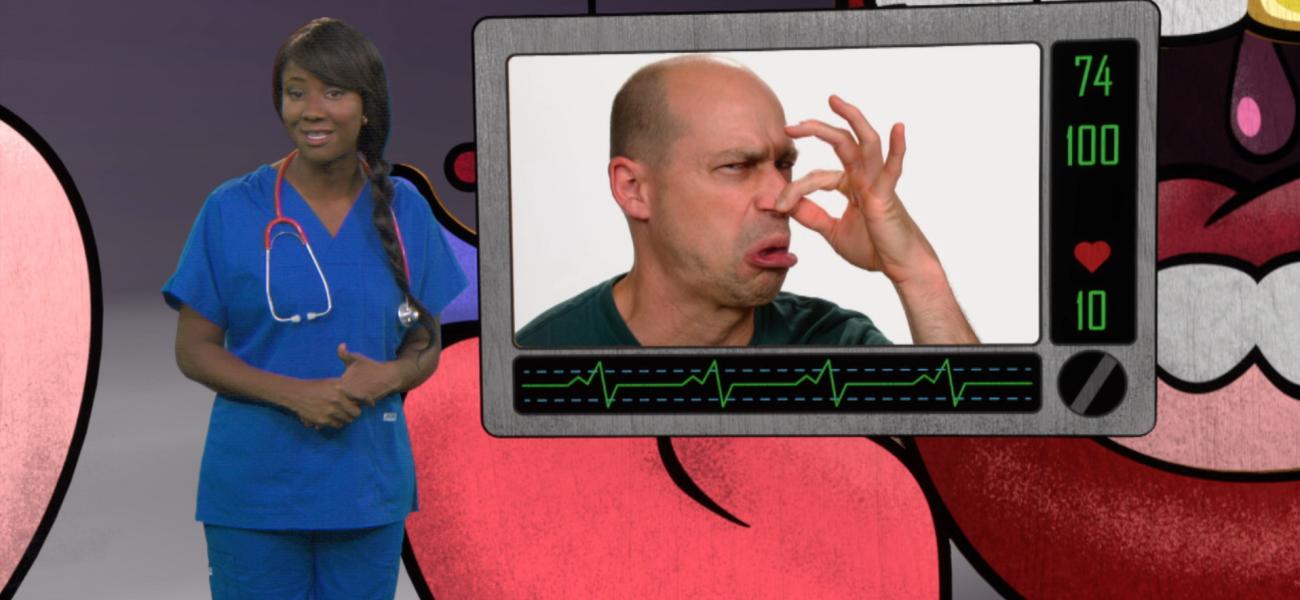
Lexie explains why men fart more than women, but women's farts stink more.
Levels:
Elementary
Grade 2
Grade 3
Grade 4
Grade 5
Subjects:
Health and Physical Education
Health
Science and technology
Life Systems
Skills:
Self-Directed Learning
French level:
B1: Threshold
B2: Vantage
Episodes (
15
)
Subscription
play_circle
E154
: Savais-tu que...La mélanine : déterminant de la couleur de peau
.
30 s
.
Christopher explains that the amount of melanin production in our body determines the color of the skin.
Subscription
play_circle
E155
: Savais-tu que...La digestion commence dans la bouche
.
30 s
.
Christopher explains the process of digestion and how it begins in the mouth with teeth that cut food into small pieces.
Subscription
play_circle
E156
: Savais-tu que...La poussière est faite de peau morte
.
30 s
.
Christopher explains that dust is made up of many things including dead skin cells.
Subscription
play_circle
E157
: Savais-tu que...Le gros intestin n'est pas grand
.
30 s
.
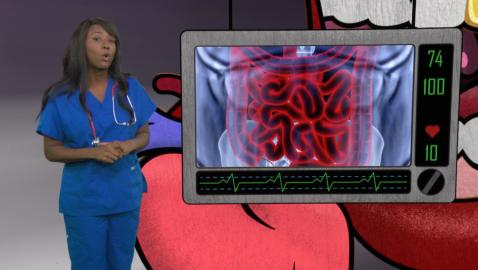
Lexie explains that, despite its name, the large intestine is shorter than the small intestine and is about 1.5m long.
Subscription
play_circle
E158
: Savais-tu que...La peau : l'organe le plus grand
.
30 s
.
Lexie explains that the skin is the largest and heaviest organ of the human body.
Subscription
play_circle
E159
: Savais-tu que...Le rôle des reins
.
30 s
.
Lexie explains that the kidneys are very important organs in the body because they eliminate the waste that travels in the blood.
Subscription
play_circle
E160
: Savais-tu que...On peut vivre avec un seul rein
.
30 s
.
Lexie explains that the human body works very well with just one healthy kidney.
Subscription
play_circle
E161
: Savais-tu que...La langue a un superpouvoir
.
30 s
.
Lexie explains that one third of the tongue is not visible and helps to get food down the throat.
Subscription
play_circle
E162
: Savais-tu que...Des millions de bactéries sur notre peau
.
30 s
.
Lexie explains that the skin is covered with millions of bacteria that help protect against diseases.
Subscription
play_circle
E163
: Savais-tu que...Les os grandissent et s'arrêtent
.
30 s
.
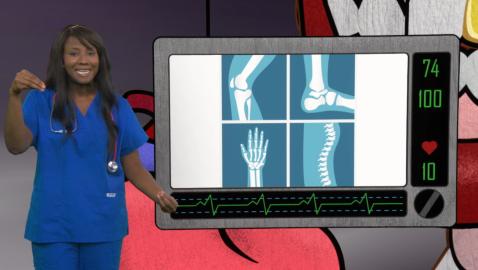
Lexie explains that bones grow and become stronger until the age of 16 for girls and 20 for boys.
Subscription
play_circle
E164
: Savais-tu que...Le rôle du squelette
.
30 s
.
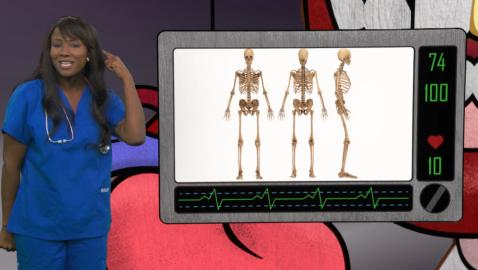
Lexie explains that the skeleton serves as a base for the muscles and allows the body to be strong and protects organs such as the heart.
Subscription
play_circle
E165
: Savais-tu que...Le plus petit os
.
30 s
.
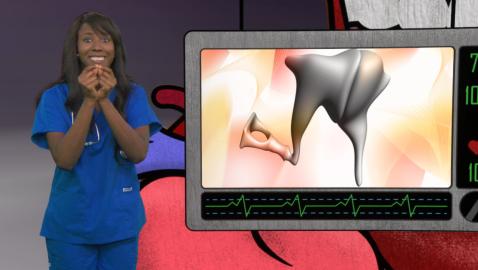
Lexie explains that the smallest bone of the human body is in the ear and is called the stirrup.
Subscription
play_circle
E166
: Savais-tu que...Des kilomètres de vaisseaux sanguins
.
30 s
.
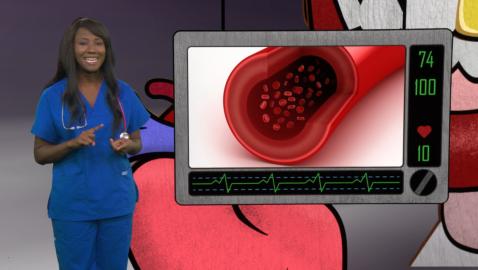
Lexie explains that there are three types of blood vessels in the body that carry blood and that measure in all more than 160,000km in length.
Subscription
play_circle
E167
: Savais-tu que...Un os cassé se répare
.
30 s
.
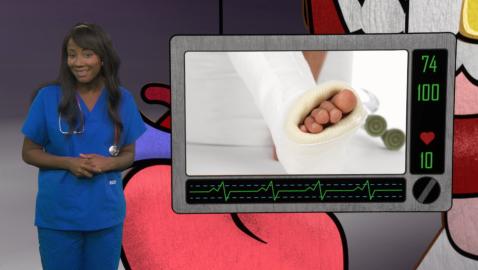
Lexie explains that bones repair themselves when they break; however, they need to be immobilized to get there.
Subscription
play_circle
E168
: Savais-tu que...Le plus petit organe
.
30 s
.
Lexie explains that the smallest organ of the human body is in the brain and is called the epiphysis.
Loading more episodes
Loading more episodes
Levels:
Elementary
Grade 2
Grade 3
Grade 4
Grade 5
Subjects:
Health and Physical Education
Health
Science and technology
Life Systems
Skills:
Self-Directed Learning
French level:
B1: Threshold
B2: Vantage
help
Access FAQ,
Help
,This link will open in a new tab